By Roxanne Finn
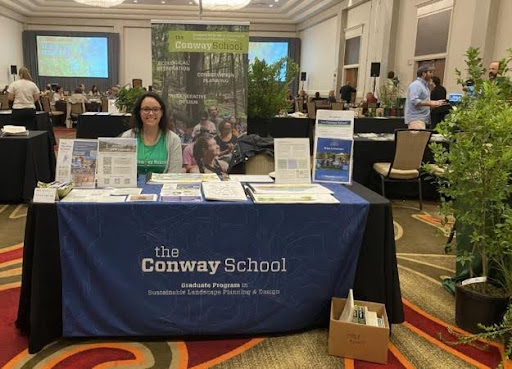
Conway and the Ecological Landscape Alliance go way back. We have had shared institutional missions for many years, and Conway proudly counts many of our alums and employees as current and past members, presenters, contributors, and board members. This year the annual ELA Conference was back to being in person, and Conway decided to participate not just as attendees but as exhibitors. Conway employees Cassandra Burns and Roxy Finn traveled out to Providence, RI, excited to watch our alum presenters at this year’s conference and looking forward to meeting others who share our collective vision of an ecologically resilient future.
We were not disappointed. Even before we had our exhibitor table set up we were visited by Conway alums who were attending from as far away as Maine, along with nursery owners, designers, land trust representatives, and many other occupations.
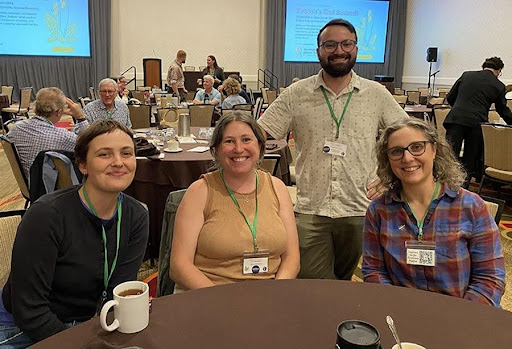
The conference theme was “Navigating Uncertainty.” A common thread we observed was the value of connecting in person in these times of increasingly fragmented societies, untrustworthy information sources, and polarizing opinions. The online world has created many new opportunities for connection, but there is still a need for face-to-face interactions, in part to rebuild some certainty through strengthened relationships.
So what are the results of those interactions? Sometimes it’s serendipitously realizing that you have a great deal in common with another attendee, which doesn’t happen in a webinar. Other times it’s being able to chat informally with the keynote speaker over lunch to gain more clarity on a point they made in their talk. It’s also spending quality time with alums across years and decades, many of whom have never met each other before, and listening to the vastly different versions of the Conway experience that, while activating careers in many directions, converge and intersect at events like this one, with much synergy created.
Two keynote speakers provided intriguing portals into their respective worlds. The first, Christopher Roddick, former Head Arborist and Foreman of Grounds at Brooklyn Botanic Garden, introduced us to the word parenchyma, an enigmatic, shapeshifting tissue in plants that can photosynthesize and store starch, water, or air as needed. The function of parenchyma, Roddick explained, informs a great deal of horticultural best practices such as pruning, guidance that often runs counter to mainstream arborist traditions.
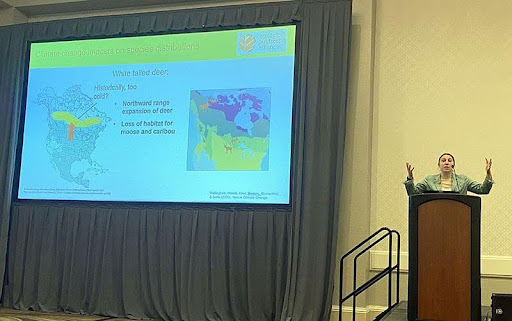
The second keynote by Dr. Evelyn Beaury, Assistant Curator of the New York Botanical Garden’s Center for Conservation and Restoration Ecology, provided data-backed recommendations for managing the ever-evolving relationships of native and non-native species in our ecosystems. Of note was the concept of growth-defense tradeoff, a dynamic that gives non-native species an advantage over the locals when they first arrive. The newcomers, who often aren’t immediately recognized by the region’s predators, can put all of their energy into growth, whereas native species must divide their time between growing and protecting themselves. The non-natives then outcompete natives until predators catch up with them. Dr. Beaury also discussed the ways in which climate change is impacting the natural ranges of many species, resulting in some species no longer being able to thrive or even survive in areas where they are indicated to be native, further complicating our ability to discern and decide how to manage our landscapes.
As much as we wanted to, we couldn’t attend every session. However, we were able to catch a few talks given by Conway alums. Rachel Lindsay ’15 of Regenerative Design Group taught attendees how to build both healthy soils and healthy workplaces in two separate sessions, Building Resilience Through Worker-Ownership and Building Healthy Soils: From Carbon Source to Carbon Sink. Evan Abramson ’18 of Landscape Interactions added to the healthy soils narrative while taking folks on an info-packed tour of his firm’s work to improve soils through increased pollinator biodiversity in his session, Healthy Soil Through Maximum Biodiversity: Replicable Models for Resilient Design.
There were also sessions on meadows, regenerative agriculture, urban and suburban design and forestry, and many other topics; Ask an Expert round table discussions; networking opportunities; and even free admission to New England Botanic Garden! The only challenge of the entire conference was choosing which sessions to attend…and possibly navigating Providence rush hour traffic. We say it was well worth the effort.
A huge thanks to the incredible staff at ELA and the Omni Providence Hotel for making this year’s return to in-person gathering such an enjoyable one. We’re already looking forward to next year.