Written by Leslie Duthie
Despite the ups and downs of spring weather in the Northeast, it has arrived and it’s time to ready your landscape for the growing season. In keeping with our thoughts about ecological landscaping, here are some tips for handling spring clean-up.
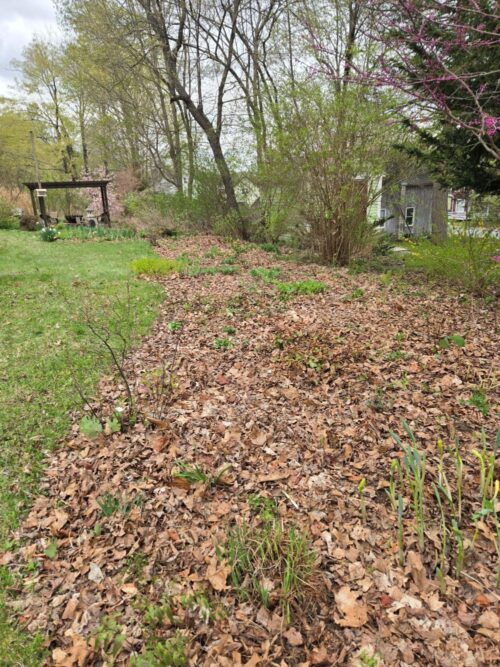
In the fall we learned to leave the leaves, so now what?
Leaves left in the fall will blow around during winter; rake and remove leaves by hand from around emerging perennials. Leave a layer of dead leaves on the garden bed as mulch. Your plants are tough enough to grow through them. You should remove more leaves from low growing
ground covers to allow the light to reach them and encourage their spread. Leaves can be moved to areas between shrubs, in the back of beds, or use them to kill lawn and establish new planting beds. If using leaves to kill lawn in spring, it might be a good idea to mow the grass in that area very short — almost scalping the ground. It sets the grass back, allowing the thick pile of leaves to do the rest. Any excess leaves can also go into compost piles.
Remember, whole leaves harbor good insects and provided winter resting places for a variety of wildlife. Try to leave them whole — they will break down soon enough and give you the weed barrier you seek.
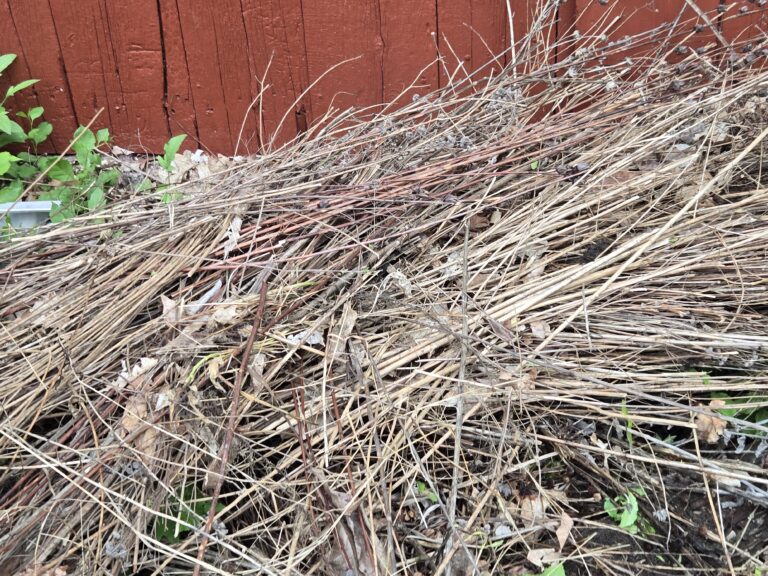
What do I do with the old stalks I cut back?
Like the leaves, those tall plants with persistent stalks were left standing in the garden as habitat for overwintering wildlife. If you need to cut them back before mid-May, cut the stalks at the base and leave the long stalk whole. Consider making piles near the compost or at the back of garden beds to allow later-emerging insects the opportunity to do so. A place with at least some sunlight will be best to encourage the emergence of any native insects. The stalks will break down and disappear as the season progresses.
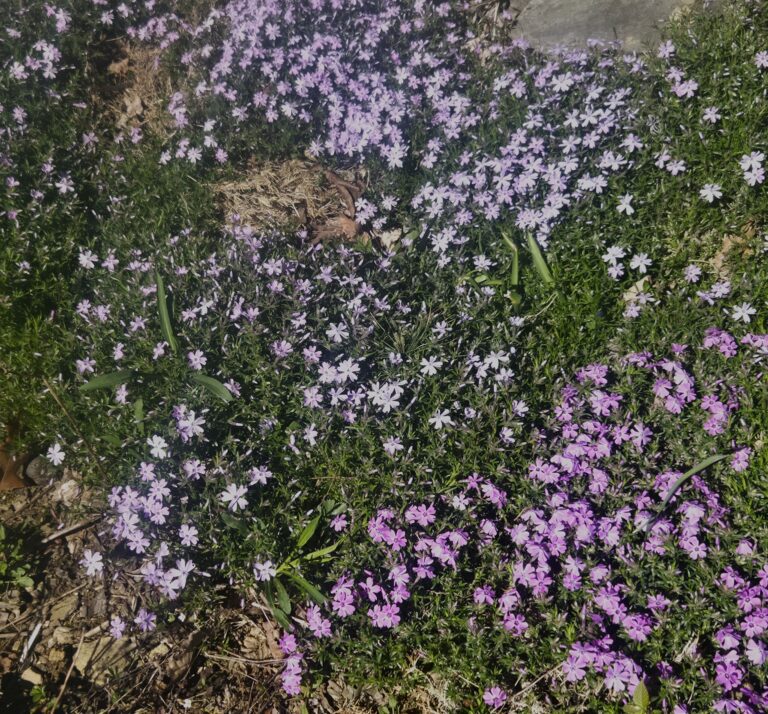
Is it time to mulch? What do I use?
If you want a more finished look to your garden, you can mow excess leaves to create a finer looking mulch — remember what was stated above, so consider just using the chopped leaves at the edges for a more manicured appearance.
You can also consider using plant material like ground covers. Green mulch or low growing plants such as creeping phlox (Phlox stolonifera), moss phlox (P. subulata), and self-heal (Prunella vulgaris) can be used in place of mulch. Fill in between your plants with a variety of other plants so that formal mulch becomes less necessary. Inter-plant early spring bloomers with late spring, summer, and fall blooming perennials so that your garden changes from season to season. The early plants fade and the later ones shine as each season progresses, keeping the soil covered and the garden fresh.
Spring is also a good time to turn your compost pile and add a fresh layer of composted material to your garden. You can use the compost in place of both fertilizer and mulch! This will add not only nutrients, but also beneficial microbes to your garden.
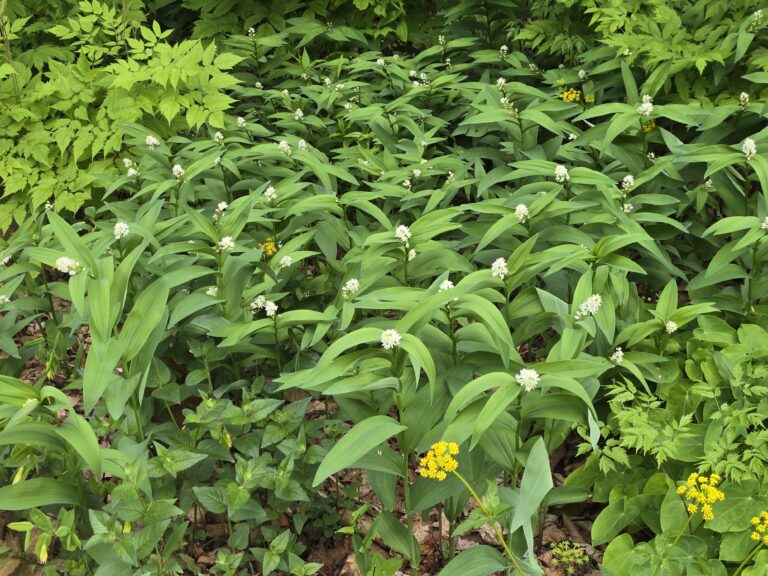
Plant some native plants. The current recommendation is that your garden should contain 70% native species and 30% introduced plants. You don’t have to give up your favorite garden perennials, but add plants found in your region each year. Soon you will find that you have lots of native plants intermingled with your garden perennials. When selecting these plants, try to use true native plants versus cultivars of the natives, or at least try to select a cultivar where the flower parts have not been modified.
Should I fertilize the garden? A soil test will help you determine if fertilizer is necessary for your garden area. In general, for most garden beds, that layer of compost added to the garden can be very helpful and is often sufficient. Also, the decaying leaves that you have left in the garden are returning nutrients back to the soil. If you are thinking about a vegetable garden, fruit bearing plants, or things that have not performed well, it is best to use a slow-release organic fertilizer. Beware of using high nitrogen fertilizers that provide quick greening but little else.
These suggestions make my garden look messy. Embrace the mess. Nature is not neat. The last time you walked in the woods or visited a flowery meadow, think about what you saw. Leaves and fallen branches cover the forest floor, moss starts to grow on fallen trees providing seed or spore beds for emerging wildflowers and ferns, partridge berry grows in mats between the moss and logs at the edge of a trail. The ‘mess’ is only a space for other things to grow and live. Yes, you should still weed out garden thugs or problem plants.