
In the garden, different plants play different roles. Trees and shrubs provide structure and height,casting shade and providing flowers and fruits for wildlife. Perennials fill in at the ground level. In our gardens, this space is usually the most diverse layer.
Annuals are unique in that they provide color throughout the spring, summer and fall, but as their name implies, they do not return year after year. Annuals at garden centers typically do not re-seed or return. As cultivated plants, they are sterile or not able to return in the same form. (Think of your pansies that return as Johnnie-jump-ups.) Planting a lot of annuals can also be time consuming and expensive depending on what the plan is for a garden space, yet – there seems to always be a space where they are necessary.
The good news is that there are a couple of great native plant annuals that can be used throughout the northeast and central parts of the U.S. Of the two described here, one will naturally re-seed in the garden while the other requires being sown each year as the seeds will not overwinter.
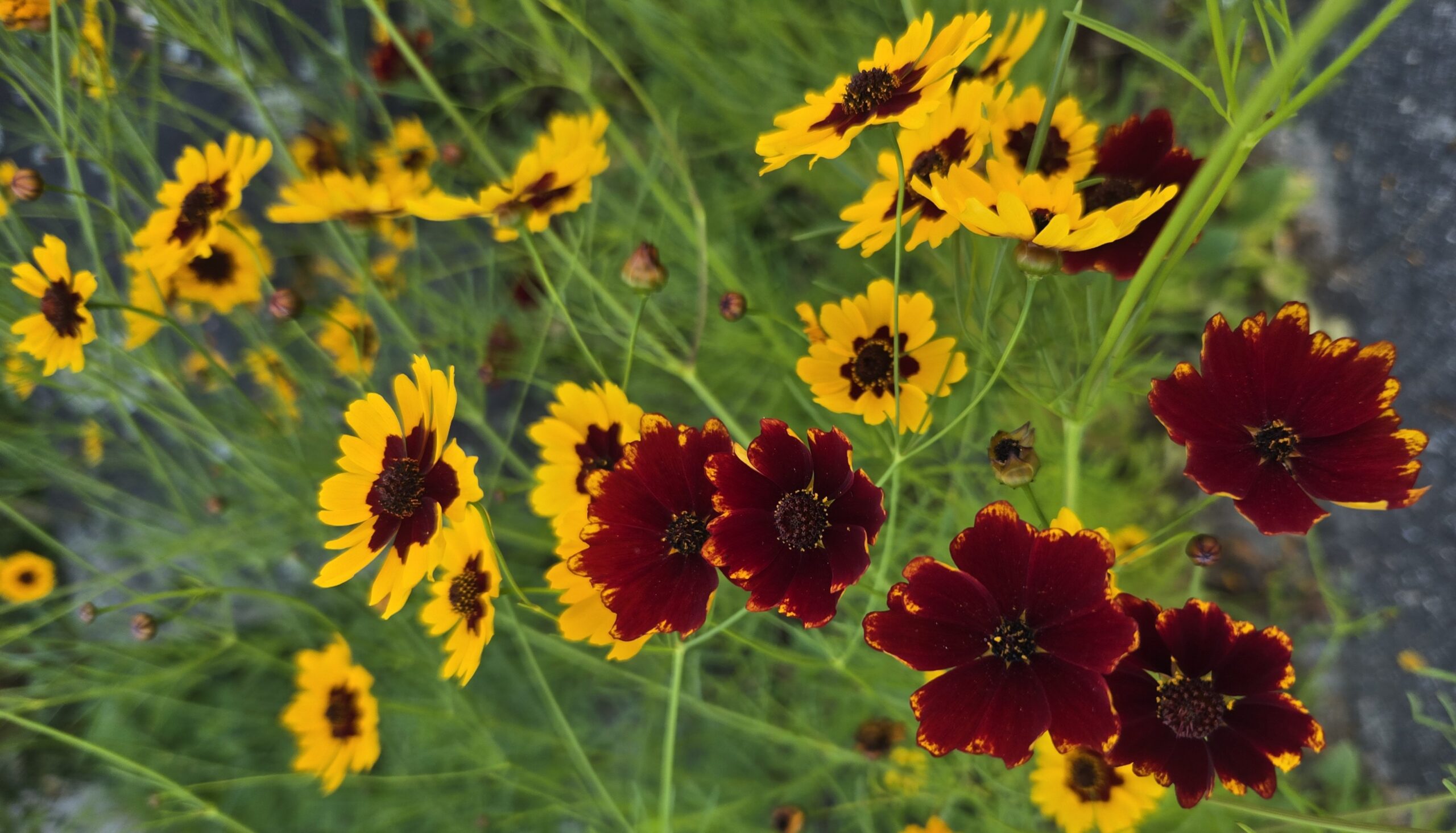
Tickseed (Coreopsis tinctoria) is a tall annual that will re-seed in New England. It grows to a height of about two feet and has fine, feathery foliage and the flowers are about 1.5” across. The plant produces beautiful yellow daisy flowers that have a deep maroon center. Although they tend to move about from year to year, these plants are pretty consistent in growing in a similar place. If you want to move it around, tickseed is fairly easy to collect seed and sow it in a prepared garden bed where you would like it. Tickseed is not aggressive against common weeds and will respond by not growing where weed pressure is high. Fortunately, they usually find space where they can germinate and grow. The flower can be quite variable ranging from orange-yellow to those with dark red flowers and some yellow flecks in the petals. At my home, it has reliably returned for the last four years.
Lemon mint (Monarda citriodora) is not as common throughout the north. It is a south-central U.S. native where it probably will re-seed from year to year. Lemon mint seed is not cold tolerant in the north, so this plant requires a little more effort if you want to have it in your garden. Its gorgeous pink and white flowers are a show throughout the summer and fall, and the effort to start it from seed is worth it. This uncommon northern summer flower brings a different growth habit and less powdery mildew. Seeds are easily sown indoors in March or April, then planted out as rosettes in May. Lemon mint will grow to about 3’ tall with foot long flower spikes with whorls of flowers by July. These plants make an amazing combination with any coneflowers, but it really stands out with the brown eyed susans (Rudbeckia spp.).
Like many annuals, these two plants are tolerant of a range of conditions. Both grow best in average, well-drained soil. These plants may prefer full sun, but are also tolerant of various light conditions, able to grow in only about a half day of direct sun. Annuals require a little bit of a commitment, but these two are fairly easy to get established in the garden and provide interest and color at a time when it’s needed. Seed is available from many native plant sources.