By Max Dupont
Here at Jenkins Arboretum & Gardens in Devon, PA, we have a significant focus on North American native azaleas. With an accredited and ever-expanding collection of species and hybrids, one of our main goals is to preserve genetic diversity among this incredible group of plants. Through building and maintaining a diverse collection, we hope to safeguard threatened and endangered species while providing an abundance of material for future hybridization and propagation. Beyond this goal, many of us are native azalea enthusiasts. We find their many forms, colors, and fragrances to be among the most beautiful and interesting of North American native shrubs.
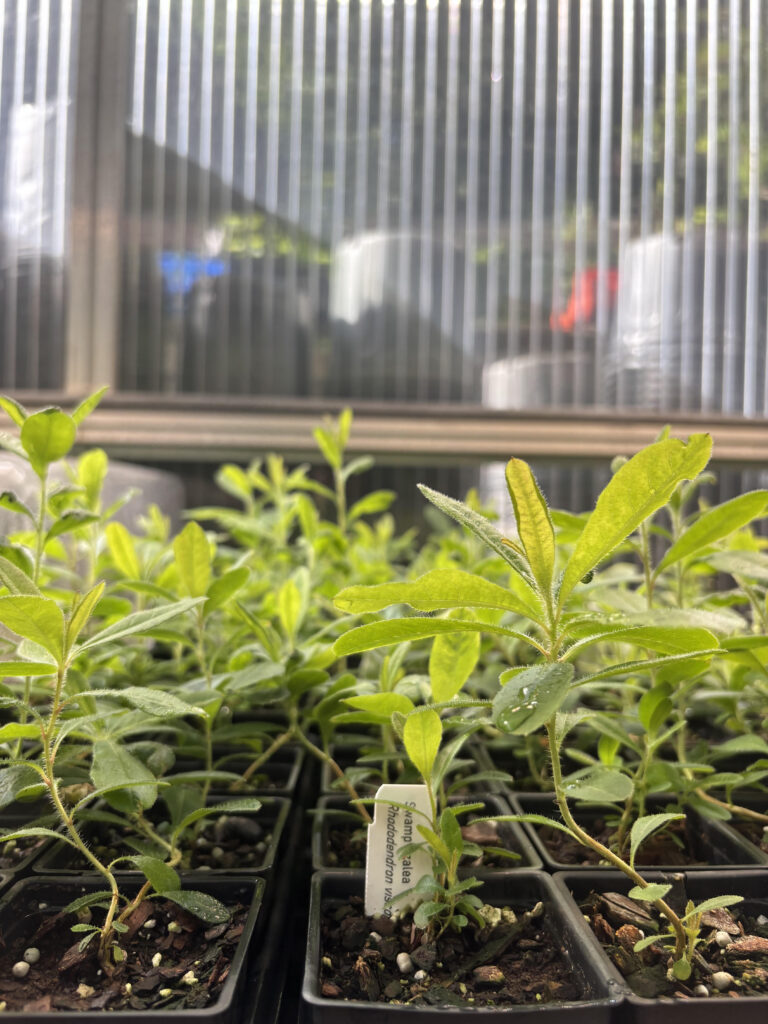
One of the ways in which we are now working to expand our collection of these plants is through seed propagation. This process allows us to accomplish several goals at once. Firstly, we can grow seedlings and select plants that show unique traits for further observation and propagation. Some of these plants may eventually be added to the garden’s collections. Secondly, any plants not selected can be grown on for eventual sale in our seasonal retail nursery. The choice to propagate these plants from seed was an easy one since many native azalea species are finicky to propagate vegetatively. From seed, just a few pods can produce hundreds of vigorous, genetically diverse plants that may catch up to plants produced via cuttings in no time with proper care.
In winter 2025, I meandered through the garden with our Director of Horticulture & Curator, Steve Wright, to collect open-pollinated seed from plants of interest. Seed parents included cultivars such as Rhododendron austrinum ‘Moonbeam’ (a lovely golden-yellow selection) as well as straight species plants like Rhododendron calendulaceum and Rhododendron arborescens. The seeds I was most excited about came from Rhododendron viscosum var. montanum—a low-growing, suckering variety of swamp azalea. Each swollen, dark seed pod contained a plethora of tiny, papery seeds that rained down like confetti onto paper plates when crushed.
After cleaning, the seeds were sown in our greenhouse under LED grow lights, where they readily germinated. Once the seedlings grew several sets of true leaves, we began a weekly drench of their trays using a rotation of products to keep pathogens and insect pests at bay. Light fertilization soon made its way into the regimen, and, in just a few months, the seedlings were ready for transplanting into individual 2” pots. As I write this, they have been trimmed and are destined for quart-sized pots before the heat of summer kicks in. They will overwinter in those pots and will be bumped into gallon-size containers next year.
As I observed the growth of our open-pollinated seedlings, I was surprised by the sheer amount of diversity displayed—particularly within batches originating from the same seeds. Habits varied, with some seedlings maintaining a single upright shoot, while others were naturally dense with anywhere from three to five shoots emerging from the base of a single, sturdy plant. Among the Rhododendron arborescens, for example, some plants had leaves that were darker or longer than others. These observations are an excellent example of genetic diversity, and they only intensify my eagerness to see these plants bloom someday. With so much diversity in morphology and habit already, who knows what kinds of flowering traits we may observe in these plants?
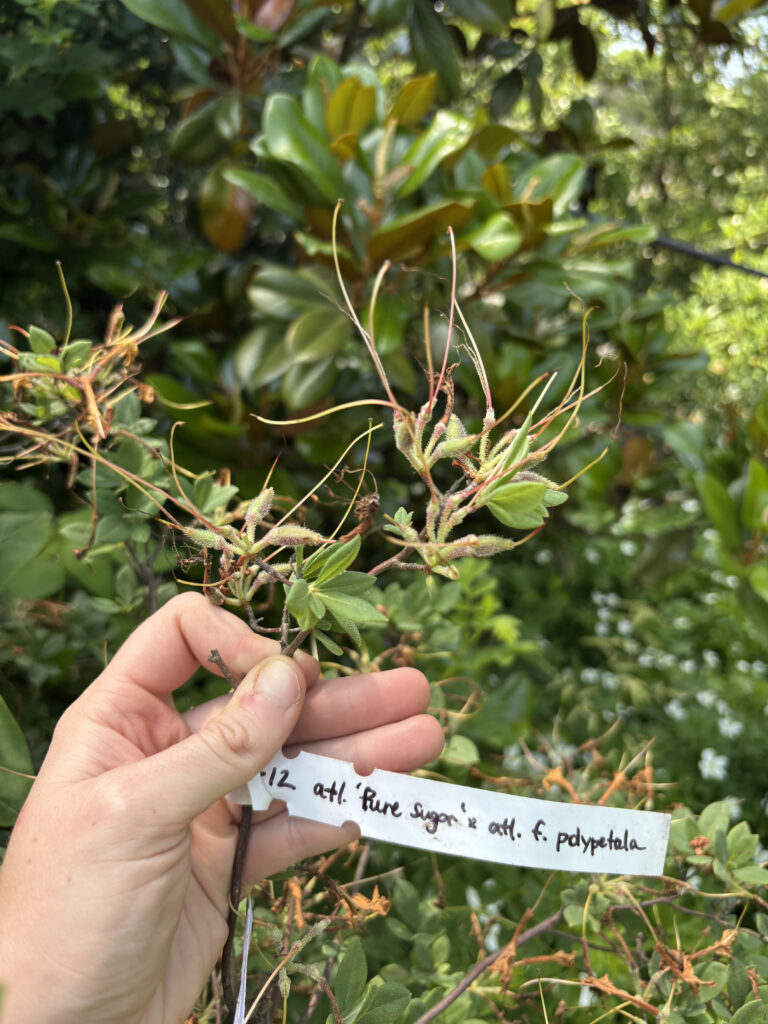
This spring, we decided to do something new and hand-pollinate specific native azaleas within the garden with the hopes of producing plants with interesting and unique characteristics. Some of the plants chosen as seed and pollen parents are selections made here at Jenkins which are not officially registered. One such plant, a Rhododendron periclymenoides nicknamed “Stiff Upper Lip”, touts a stunning dark pink blossom with a white top petal. Another, a Rhododendron atlanticum that we call “Pure Sugar”, earned its moniker from its deliciously fragrant blooms.
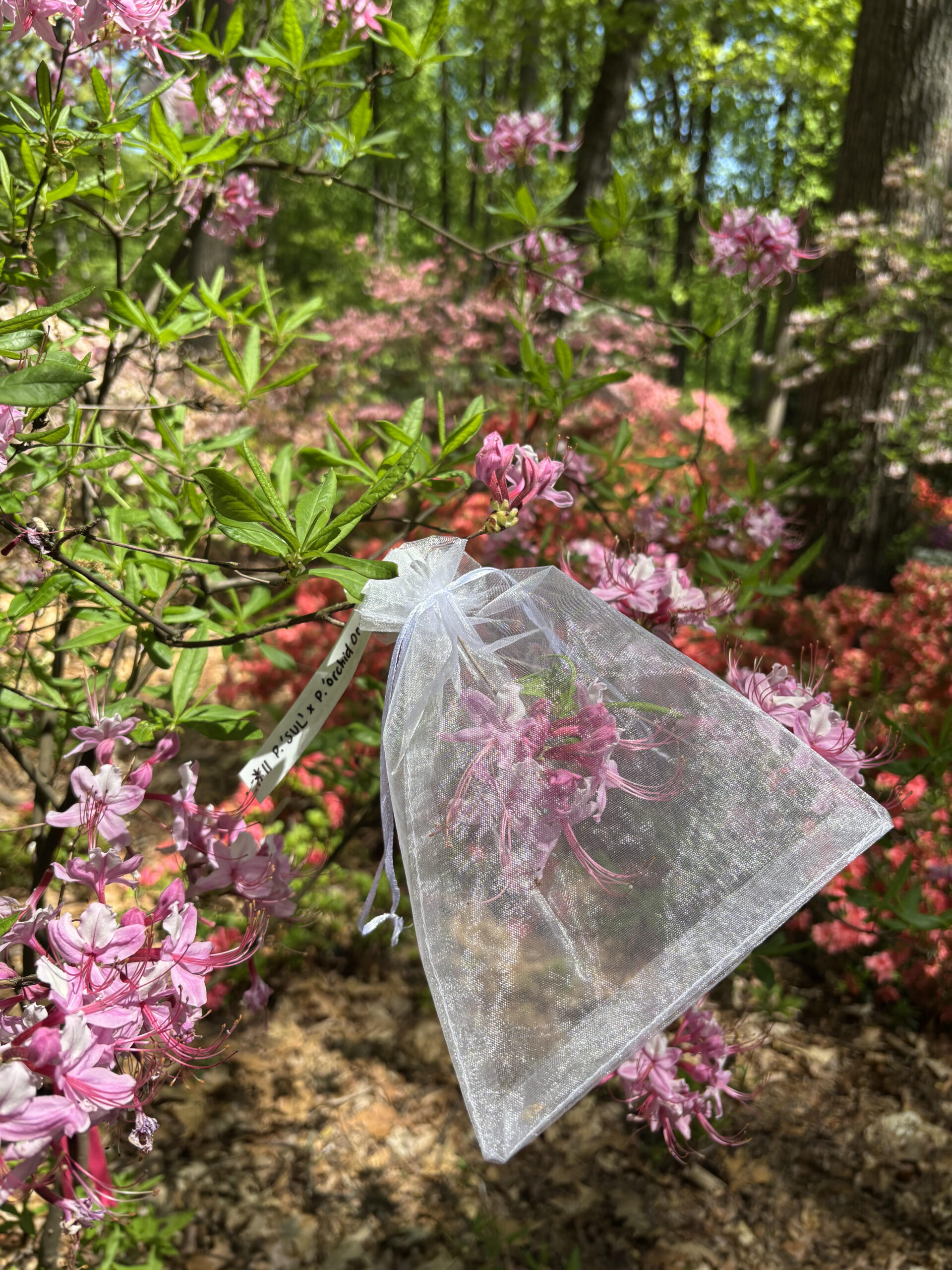
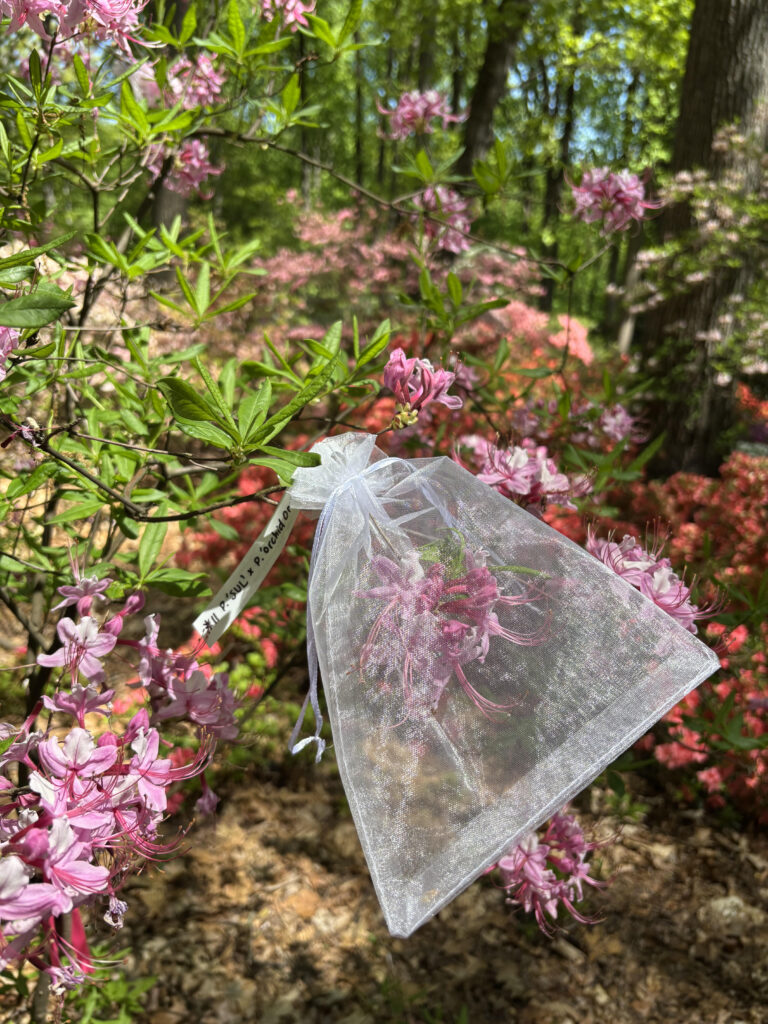
Hand-pollinating the azaleas was a simple yet dedicated process. After selecting the seed and pollen parents, the plants were marked with flagging tape in the garden for easy spotting on pollination days. Using mesh bags, we covered a few sets of buds on each prospective seed parent to prevent them from being contaminated with pollen from other plants when they opened. As soon as the buds started to pop, it was time to head out with paintbrushes and labels to begin the hand pollination.
While out pollinating, I made a few unexpected observations. Some plants, such as Rhododendron austrinum and its cultivars, produced an excess of pollen that practically stuck itself to my paintbrush in long strands, requiring no coercion whatsoever. Other plants – like some of the Rhododendron periclymenoides – were particular about how much pollen they wanted to share and when, but produced adequate amounts nonetheless. Beyond the observable phenomena, as I carefully transferred pollen from plant to plant, I developed an even greater interest in and respect for their pollinators.
I had recently learned that some native azaleas, such as Rhododendron calendulaceum, have been observed for their plant-pollinator interactions. With their long, protruding stamens and stigmas, native azalea flowers call out for a very specific type of pollinator. Visiting bumblebees and other small insects make their best attempt—and may get away with some pollen or nectar—but otherwise do a poor job of actually pollinating the flowers, unable to easily reach both stamens and stigma. It has been found that the real heroes of native azalea pollination are butterflies, and that they facilitate pollination with their wings. A study conducted by Mary Jane Epps, a biologist from North Carolina State University, found that the eastern tiger swallowtail, in particular, has the perfect wing size and wing-flapping behavior to effectively pollinate native azalea flowers (2015). As I pollinated plants in the garden, I kept an eye out for swallowtails to thank them for their ecological services.
The entire hand-pollination process took several weeks, as I patiently waited for more blooms to open on different species. Morning pollination seemed easier—the plants tended to offer more pollen on a cool, sunny morning than in the heat of the afternoon when pollinators were taking a break. After hand-pollinating each variety, individual branches on the plants were tagged for later seed collection. Within just a couple of weeks post-bloom, seed pods began to visibly swell. We now await their ripening, and I look forward to the entire process of collection, cleaning, sowing and growing more native azaleas to share.
Max Dupont is the Nursery Production Manager for Jenkins Arboretum & Gardens in Devon, PA, where they focus on the propagation of native plants to support the garden’s seasonal retail nursery as well as the garden’s collections. They are a former Morris Arboretum Propagation Fellow and previously managed the nursery department at Wedgewood Gardens in Glen Mills, PA. They are passionate about growing native plants from seed to promote genetic diversity and support biodiverse systems.
References:
Epps, M. J., Allison, S. E., & Wolfe, L. M. (2015). Reproduction in flame azalea: A rare case of insect wing pollination. The American Naturalist, 186(2), 294–301. https://doi.org/10.1086/682006