
By Jasmin Callahan
As a fairly new owner of a native plant nursery, there is an endless to-do list of tasks: thinking about ways to make growing thousands of plug trays more efficient, figuring out how to pay for necessary infrastructure improvement projects, and so on. Thankfully, the month of July brings a small reprieve when compared to the non-stop months of spring and early summer. Deliveries and orders are slowing down a bit so there is finally a chance to take a breath, catch up, and carry on with the adventure of learning, all for the sake of indulging curiosity, and maybe with the result of growing healthier plants too.
Another phase of my life was spent farming organic vegetables and flowers. Soil health and its effects on crop production were a consistent theme. Most books, workshops, and presentations that I read or participated in were focused on soil, including everything from nutrient availability, microbes, mycorrhizal associations, root exudates, to compost, leaf mulch, cover crops, no-till vs. tilling, and more.
Now, while nursery production of container plants is still a form of agriculture, it is vastly different. Nonetheless, my mind keeps trying to apply what I learned while farming to growing plants in containers. Growing plants that are intended to go into natural New England soils is not the same as growing crops in nutrient rich, amended soils where the primary concern is production and yield. Instead, growing natives is all about growing plants that are not just healthy but also prepared to thrive in the typical soils found in our region. So, how is that achieved? What are the best soils to use for the health of the plant while it’s in our care, and for growing a plant that will transition to the landscape without too much stress? I am still learning, but these are the rabbit holes I fall down at this time of year.
Dragonfly Natives doesn’t yet grow the diversity of plants we would like, but the plants we do grow have varied needs and thrive under different conditions. Experimenting with different soil mixes, different container shapes and sizes is all part of the process of unlocking how to grow each species best. For example, this past spring, while trialing different soil blends from various companies, we were a bit surprised by one result. Zizia aurea (Golden Alexanders) was grown in three different mixes, one of which was a newly available blend containing biochar and expanded wood pulp fiber. The product was a bit odd to work with because it was very fluffy yet sticky. It also had mixed results among the different species that we grew in it, but the Zizia aurea absolutely loved it. The foliage was beautiful, although very similar to the other soil mixes, but the root growth was impressive. I am still contemplating whether it is worth purchasing a soil mix and using it solely for one or two species. This is definitely something that I will experiment with again.
Just to add to the fun of learning, I am forever wondering which beneficial microbes and inoculants to add to the soil. Numerous products are available for purchase that are considered biological control. They contain beneficial microbes that protect against plant diseases, but there are also soil inoculants for legumes that contain bacteria that have a symbiotic relationship with the legumes. Adding inoculants is standard protocol for us, but what else could we be doing? Are there any specific mycorrhizal associations that we could be considering? What about indigenous microbes? Is anyone growing microbes from local soils that could be applied to our nursery blends? Would that be beneficial? Could they be applied in conjunction with products already in use? A good part of the enjoyment of running a nursery comes from the community and learning from others.
This past spring, we applied an OMRI-listed product called RootShield, which protects against fungal root diseases. Now that it is time to reapply, we will be applying a mycorrhizal inoculum from Prairie Moon Nursery to select plants. This mycorrhizal inoculum is “for use on sites where topsoil is missing or highly disturbed from construction or erosion.” This fungi “forms a symbiotic relationship with most species of plants, allowing healthier growth.” I look forward to seeing if there is a noticeable difference. And I look forward to many more conversations, connecting with people who happily share their knowledge, learning about what others are doing both in the nursery setting and with those who are putting the plants in the ground.
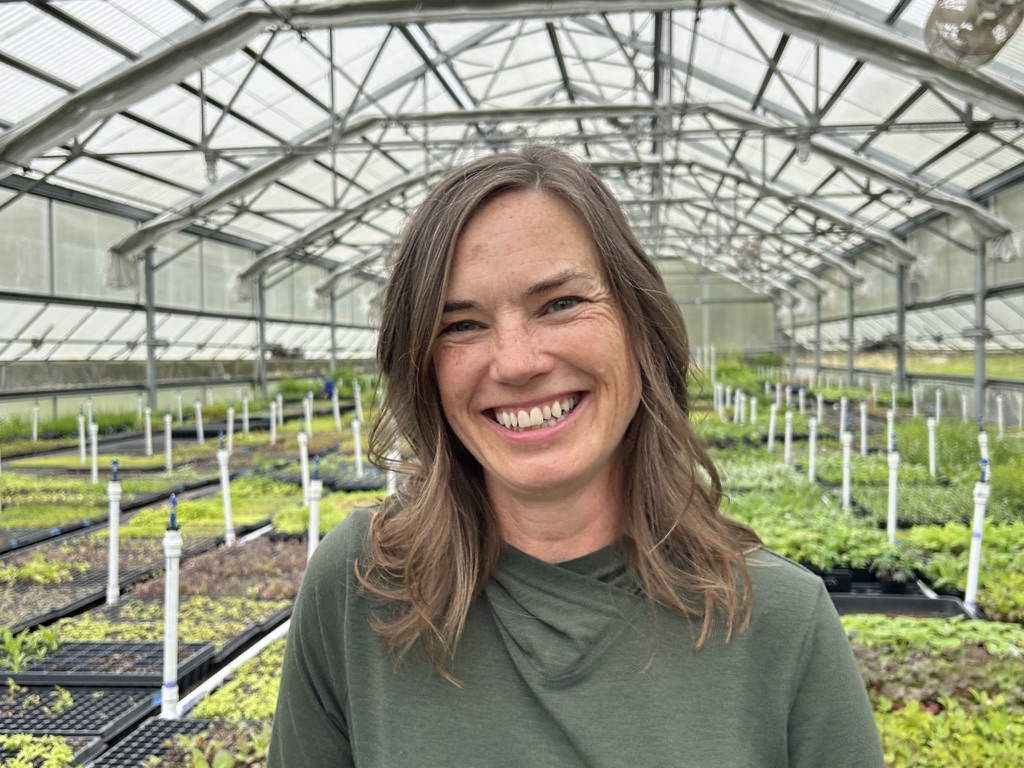
Jasmin Callahan brings nearly two decades of hands-on experience in plant production, having worked in settings ranging from an organic vegetable and flower farm with a large annual plant sale to a wholesale nursery. These roles shaped her understanding of how propagation methods, scheduling decisions, and production timelines directly affect both plant quality and business viability.
In 2024, Jasmin founded Dragonfly Natives in response to a growing demand for locally grown native plants, with a focus on plug trays. Working with ecotypic seed and regionally adapted species, Dragonfly Natives aims to provide high-quality plants for landscapers, designers, and restoration projects.