
Written by James Kut
Photos by James Kut and Jayson Schorsch
Introduction
Among the hundreds of wildflowers that once painted the Midwestern prairie, few are as quietly remarkable as Mead’s milkweed (Asclepias meadii). Unlike its more familiar relatives that readily colonize roadsides and old fields, Mead’s milkweed is a plant of patience. It grows slowly, flowers infrequently, and often spends years establishing itself before flowering and producing seed.
Mead’s milkweed was first collected in western Illinois by physician and botanist Dr. Samuel Barnum Mead in 1843, and was later described by botanist John Torrey, who named the species in Mead’s honor. More than 180 years later, the plant continues to capture the attention of botanists and restoration ecologists; not because it is flashy, but because it represents one of the increasingly rare remnants of the original Midwestern prairie.
Today, Mead’s milkweed is considered a conservation priority throughout the central United States. It is currently listed as a federally protected species under the Endangered Species Act due to widespread habitat loss. While remnant prairie populations persist, restoring healthy ecosystems depends not only on protecting existing plants in-situ, or those found in native ecosystems, but also practicing conservation through cultivation. Every healthy seedling represents another opportunity to preserve valuable genetics, increase population resilience, and strengthen the diverse communities of plants and wildlife that define our native grasslands
This propagation trial sought to document the germination of Asclepias meadii from seed while establishing a repeatable protocol that may benefit future restoration efforts. Because published propagation information remains relatively limited for this species, each successful trial contributes valuable observations that can help refine future growing practices.
A Prairie Survivor
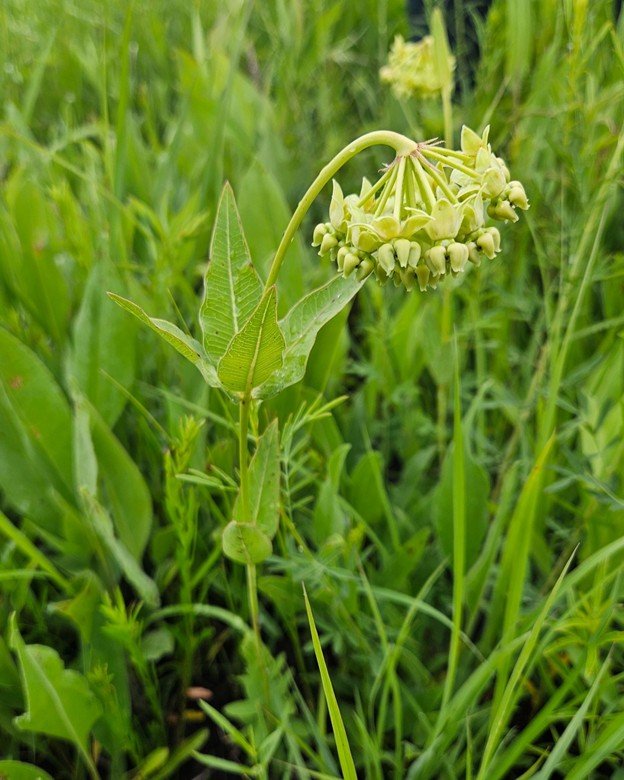
Mead’s milkweed is a long-lived herbaceous perennial native to the tallgrass prairies of the Midwestern United States. Today, however, much of that historic range has disappeared. Less than one percent of Illinois’ original tallgrass sites remain, leaving many prairie-dependent species isolated within small habitat fragments.
Unlike common milkweed (Asclepias syriaca), which readily spreads through underground rhizomes and often forms large colonies, Asclepias meadii generally produces a single upright stem arising from a deep perennial root system. Individual plants may remain dormant during unfavorable growing seasons and can persist underground for years before reappearing above ground. This natural strategy allows the species to survive environmental stress but also makes populations appear smaller, and sometimes disappear entirely during annual surveys. This is especially the case in unmanaged and no-burn sites where aggressive and invasive species can take over.
More Than a Monarch Plant
When milkweed is mentioned, most people immediately think of monarch butterflies, and for good reason. Every milkweed species serves as a host plant for monarch caterpillars, providing the only foliage their larvae can consume. Without milkweed, there are no monarchs.
However, reducing milkweed to “the monarch plant” tells only part of the story.
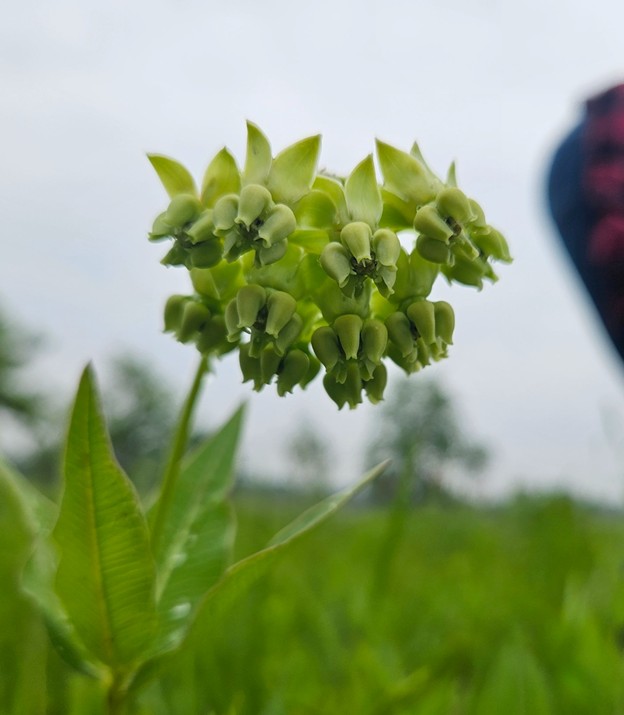
During bloom, Mead’s milkweed produces abundant nectar and pollen that support a remarkable diversity of insects. Native bees, skipper butterflies, beetles, wasps, flies, moths, and numerous other pollinating insects visit the flowers throughout the growing season. Many of these species receive far less public attention than monarchs, yet collectively they perform the majority of pollination that sustains native plant communities.
Milkweed also supports specialized insects beyond pollinators. Milkweed bugs, milkweed beetles, aphids, and several moth species have evolved alongside plants in the genus Asclepias, where they have developed adaptations that allow them to tolerate the plant’s toxic latex. These insects, in turn, become food for birds, spiders, amphibians, reptiles, and other wildlife.
Species Spotlight
Scientific Name: Asclepias meadii
Common Name: Mead’s milkweed
Family: Apocynaceae (dogbane family)
Growth Habit: Herbaceous perennial
Height: Approximately 12–24 inches
Historic Range: Midwestern tallgrass prairies
Conservation Status: Threatened, G2 – Imperiled
Primary Pollinators: Native bees, butterflies, flies, wasps, and beetles
Ecological Importance:
- Monarch butterfly host plant
- Nectar source for numerous native pollinators
- Contributes to prairie biodiversity
- Supports specialized milkweed-associated insects
Why Propagate a Threatened Milkweed?
Growing a threatened species is about much more than adding another plant to a greenhouse bench. Propagation serves several important conservation goals. Producing nursery-grown plants can supplement restoration projects, serve as ex-situ or managed collections, preserve locally adapted genetics, and reduce pressure on naturally occurring populations. It also allows researchers and restoration professionals to better understand the environmental conditions required for successful germination and establishment.
While restoration practitioners have accumulated decades of experience growing common milkweed and butterfly milkweed, fewer documented propagation protocols exist for Asclepias meadii. As a result, propagation often requires borrowing techniques from related species while carefully documenting the outcomes.
Fortunately, that’s one of the enjoyable aspects of native plant work. Every propagation season becomes a series of small experiments. Some methods exceed expectations, others teach valuable lessons, and occasionally a tray surprises you by germinating when you’ve almost convinced yourself nothing will grow.
Starting With a Seed
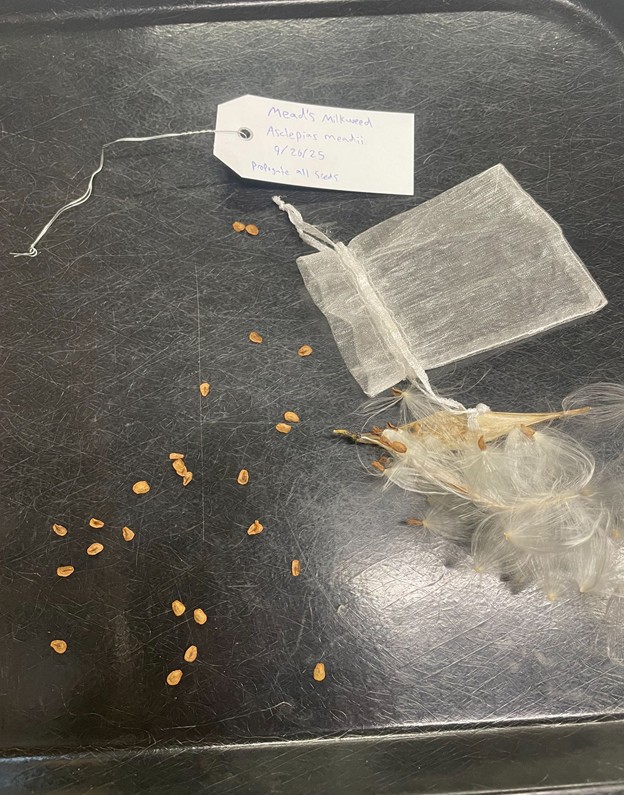
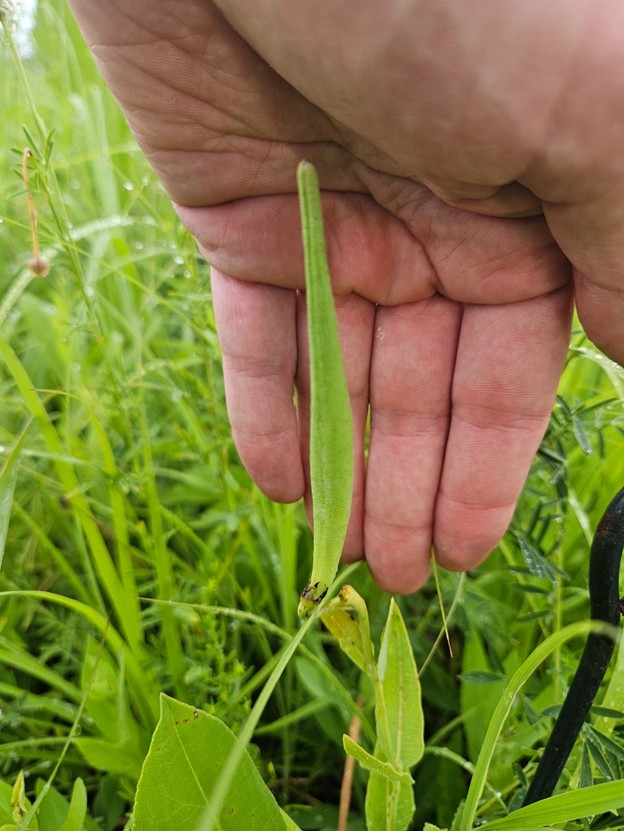
The seed used in this trial originated from a single mature seed pod collected on September 26, 2025 at The Morton Arboretum. Before sowing, each seed was processed by removing the silky white coma attached to the end of the seed.
In nature, this silky tuft functions as an elegant dispersal mechanism, allowing autumn winds to carry the seed considerable distances across open prairie landscapes. Following processing, the seeds were prepared for a propagation trial designed to simulate the seasonal conditions the species would naturally experience before germination.
Propagation Trial
Because published propagation protocols for Asclepias meadii remain relatively limited, this trial used Asclepias syriaca (common milkweed) as a reference while carefully documenting each step of the process. Although the two species differ in growth habit and ecology, both require a period of cold, moist stratification to overcome seed dormancy and encourage spring germination.
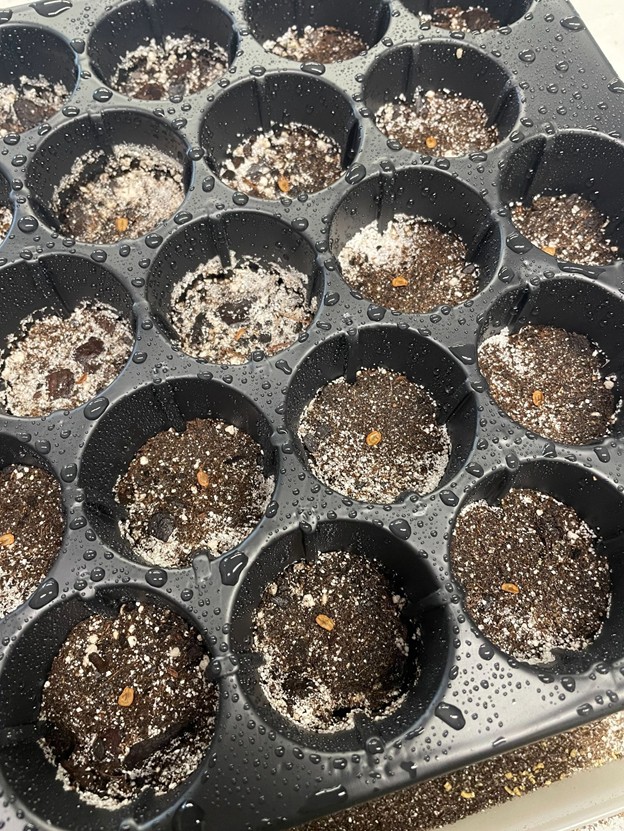
A single mature seed pod was collected on September 26, 2025, yielding a total of 37 seeds. After processing on November 20, the seeds were sown on December 1, 2025, into a 38-cell plug tray, with one seed placed in each cell (leaving one cell empty). Using individual cells minimizes root disturbance during transplanting and allows seedlings to develop healthy root systems before being moved into larger containers or restoration sites.
The growing media consisted of a commercial potting mix containing coco chips, coco fiber, perlite, peat, and compost. This blend provides a balance of moisture retention, drainage, and aeration qualities that are especially important during the lengthy stratification period. After sowing roughly 1/8-inch deep, the seeds were lightly covered with a layer of medium-grade vermiculite to help maintain consistent moisture while still allowing adequate air exchange at the soil surface.
Although the setup appears relatively simple, successful propagation often depends on consistently managing the details. Uniform moisture, stable temperatures, patience, and a willingness to resist the urge to “check on them” every few hours all contribute to successful germination.
Mimicking Winter
In their natural environment, Mead’s milkweed seeds are dispersed in autumn before spending the winter beneath leaf litter and snow. During this period, exposure to cold temperatures and moisture gradually breaks physiological dormancy, allowing seeds to germinate when warmer spring temperatures arrive.
To replicate these natural conditions, cold stratification began on December 8, 2025. Seed trays were maintained between 40–45°F for approximately 120 days.
While four months may seem like a long wait, many prairie species have evolved to avoid germinating during temporary warm periods in late autumn or winter. Cold stratification acts as nature’s insurance policy, ensuring that seedlings emerge when environmental conditions are more favorable for survival.
On April 14, 2026, the trays were transferred to the propagation greenhouse for warm stratification. Ambient greenhouse temperatures fluctuated between 68-78°F, while bottom heat maintained soil temperatures between 70–74°F, creating ideal conditions for germination.
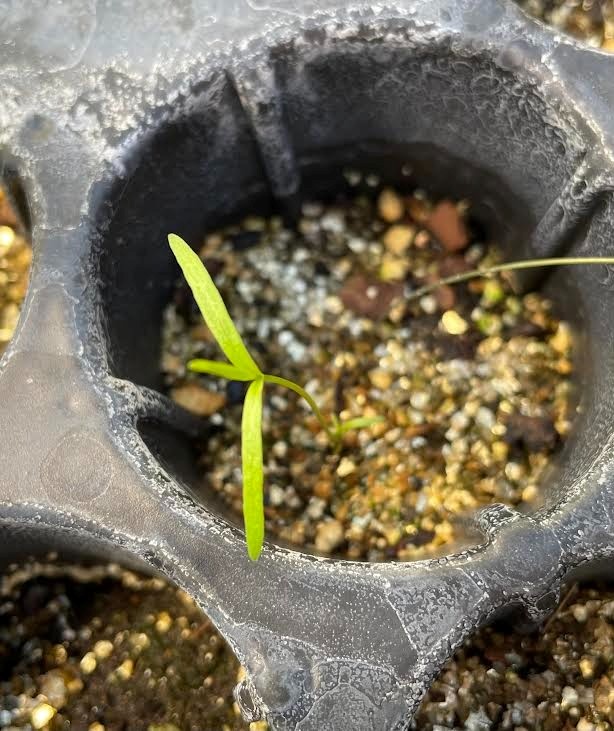
Just six days later, the first seedlings began to emerge.
Propagation at a Glance
Seed Pod Collected: September 26, 2025
Seeds Processed: November 20, 2025
Seeds Sown: December 1, 2025
Container: PT38 Plug Tray
Growing Media: Potting mix with vermiculite top dressing
Cold Stratification: December 8, 2025
Cold Temperature: 40-45°F
Duration: Approximately 120 days
Warm Stratification: April 14, 2026
Bottom Heat: 70-74°F
First Germination: April 20, 2026
Results
By the conclusion of the trial, 25 of the 37 seeds germinated, resulting in an overall germination rate of approximately 68 percent.
Several seeds appeared noticeably shriveled prior to sowing and were retained in the trial despite their lower anticipated viability. Including these seeds provided a more realistic representation of an entire seed lot rather than selectively sowing only the highest-quality seed. Given their inclusion, a 68 percent germination rate represents an encouraging outcome for a species with relatively little documented propagation information.
The first seedlings emerged quickly once warm conditions were introduced, suggesting that the combination of extended cold stratification followed by consistent bottom heat successfully met the dormancy requirements for this seed lot.
Although this project represents only a single propagation trial, documenting successful protocols is valuable. Each additional propagation effort helps build practical knowledge that can be refined over time and compared among growers working with this species.
Lessons Learned
Although this project involved a relatively small sample size from a single seed pod, it demonstrated that Asclepias meadii can be propagated successfully using methods adapted from more commonly grown milkweed species. The combination of extended cold stratification, consistent moisture, and warm bottom heat produced encouraging results that offer a practical starting point for future propagation efforts.
Perhaps the most encouraging outcome was not a 68 percent germination rate, but that the protocol proved successful using standard nursery practices. It also provides valuable data for restoration nurseries and conservation organizations interested in expanding the production of threatened prairie species.
Looking Toward Restoration
The ultimate purpose of propagation extends far beyond producing healthy seedlings in the greenhouse. Plants generated through projects like this have the potential to contribute to future restoration and reintroduction efforts, increasing both plant diversity and long-term resilience within restored prairie communities. Potential reintroduction locations at The Morton Arboretum in Lisle, Illinois include Meadow Lake, a man-made pond that serves as a detention basin for the Arboretum’s Visitor Center and main parking lot, as well as other suitable prairie sites identified by the Arboretum’s Natural Areas team.
Site selection involves much more than finding an open patch of ground. Soil conditions, sunlight, hydrology, competing vegetation, management history, and long-term stewardship all influence whether newly introduced plants will survive and reproduce. Successful restoration depends not only on establishing individual plants but on rebuilding functioning ecological communities.
These efforts reflect the collaborative work of Senior Manager of Natural Areas Spencer Campbell, Natural Areas Supervisor Lisa Warren, Natural Areas Technician Jayson Schorsch, and the broader Natural Areas staff, volunteers, and leadership at The Morton Arboretum dedicated to restoring and managing our natural areas.
While a single tray of seedlings may seem modest, prairie restoration has always been built one plant at a time. Every healthy seedling is another step toward strengthening native plant communities, supporting pollinators, and ensuring that one of the Midwest’s most distinctive and increasingly uncommon wildflowers continues to thrive.
About the Author
James Kut works in Plant Production at The Morton Arboretum, where he propagates a wide variety of species for the Collections, Natural Areas, Display, Research, and New Plant Development Program departments. His passion for plants began in childhood, inspired by his grandmother, whose love of gardening sparked a lifelong interest in the natural world. He has a particular appreciation for and interest in plant propagation and enjoys growing a wide variety of species, with a special interest in carnivorous plants. Among his favorite plants are Nepenthes, whose unique adaptations continue to fuel his fascination with botany and ecology. Outside of work, he maintains several beehives, cultivates an ever-growing collection of plants, enjoys spending time with his fiancée and their pets, and appreciates finding new ways to support biodiversity in his own yard.
The Morton Arboretum is an internationally recognized tree-focused botanical garden and research center. Its 1,700 acres of beautiful tree-filled landscapes are a place of enjoyment, a vibrant hub for nature education, and a world-renowned center for scientific research that studies trees and how to sustain them. Its vision is a greener, healthier, more beautiful world where people and trees thrive together. As a nonprofit organization, the Arboretum’s mission is to collect, study, display, and conserve trees and other plants from around the world to inspire learning, foster enjoyment, benefit communities, encourage action, and enhance the environment.
References
Baskin, C. C., & Baskin, J. M. (2014). Seeds: Ecology, Biogeography, and Evolution of Dormancy and Germination (2nd ed.). Academic Press.
Flora of North America Editorial Committee. (2000–present). Flora of North America North of Mexico. Oxford University Press.
NatureServe. (2025). NatureServe Explorer: Asclepias meadii. https://explorer.natureserve.org
United States Department of Agriculture, Natural Resources Conservation Service. (2023). Plant Guide for Mead’s Milkweed (Asclepias meadii). Manhattan Plant Materials Center. https://www.nrcs.usda.gov/plantmaterials/kspmcsr12823.pdf
U.S. Fish and Wildlife Service. (2024). Mead’s Milkweed (Asclepias meadii) Species Profile. https://www.fws.gov/species/meads-milkweed-asclepias-meadii
The Morton Arboretum. Internal propagation records and observations, 2025–2026.
