Reported by Tawny Simisky, Extension Entomologist, UMass Extension Landscape, Nursery & Urban Forestry Program
In early September, the MA Department of Agricultural Resources reported that spotted lanternfly (Lycorma delicatula; SLF) had been found in over 145 Massachusetts communities during the 2026 growing season, and that number was rising. This is a notable increase from last year. Residents report frustration in managing the honeydew-producing insects in their landscapes, and the media has heightened interest in discussing the distribution of this pest in Massachusetts. This article will discuss a brief history of the spotted lanternfly in MA and provide tips for dealing with this pest.
SLF – Arrival in MA, biology, and disruption
The first established population of spotted lanternfly was discovered in Fitchburg, MA in Worcester County in 2021. Since then, it has been found in western, central, and eastern parts of the state.
The spotted lanternfly is reported to feed on over 103 species of plants, according to research (Barringer and Ciafre, 2020). This includes tree-of-heaven (Ailanthus altissima) (preferred host), wild and cultivated grape (Vitis spp.), black walnut (Juglans nigra), maple (Acer spp.), and many others.
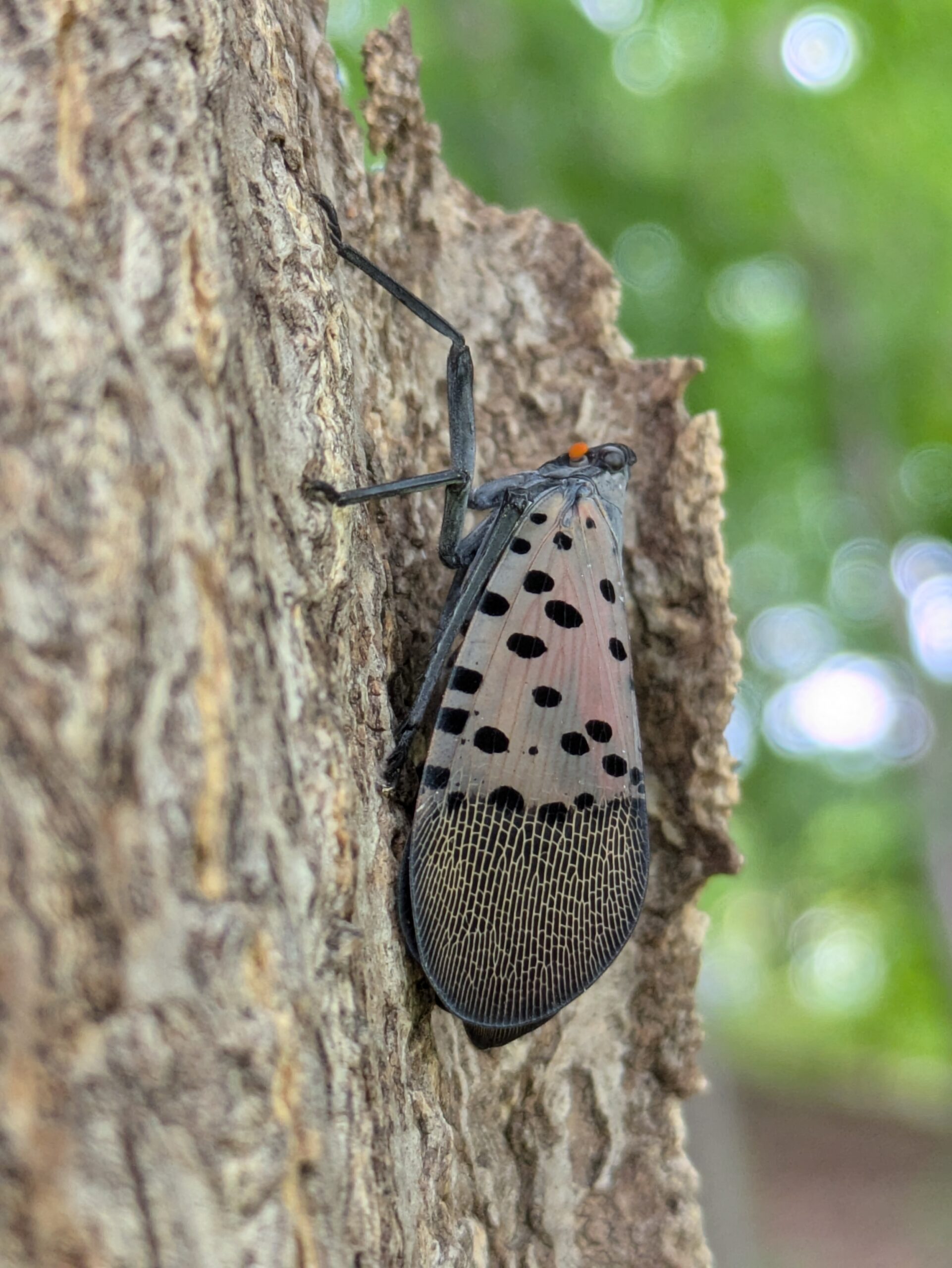
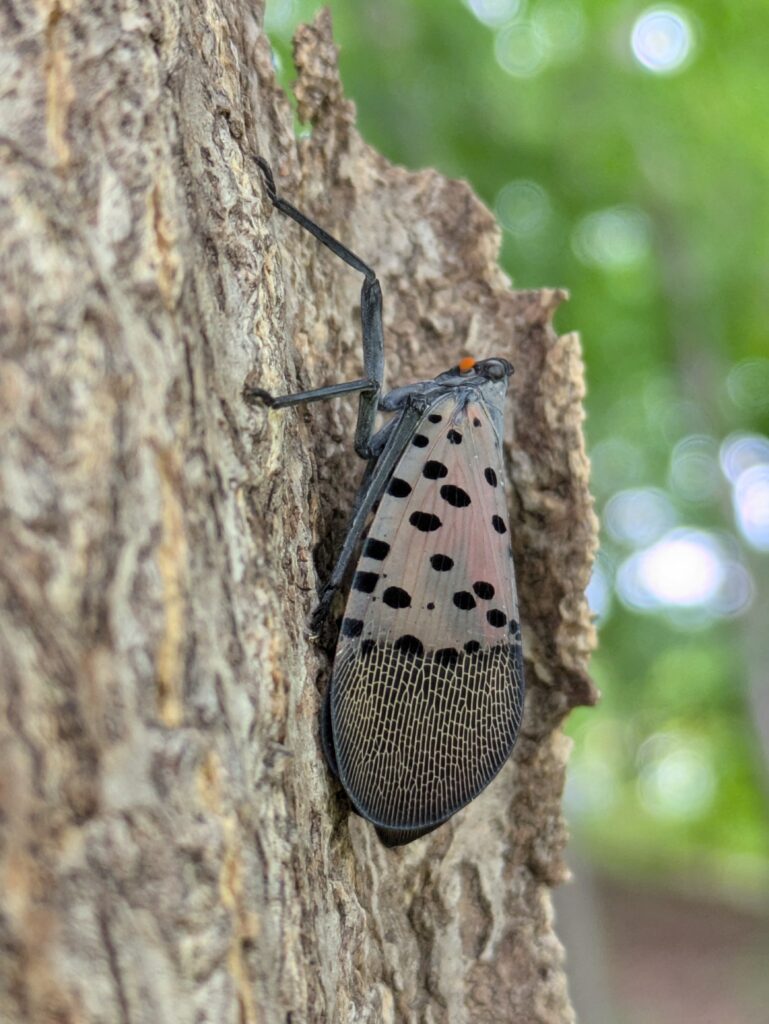
Adult spotted lanternflies are 1 inch long and ½ inch wide at rest. Adults are currently active in Massachusetts. The forewing is gray with black spots of varying sizes, and the wing tips have black spots outlined in gray. Hindwings have contrasting patches of red and black with a white band. The legs and head are black, and the abdomen is yellow with black bands.
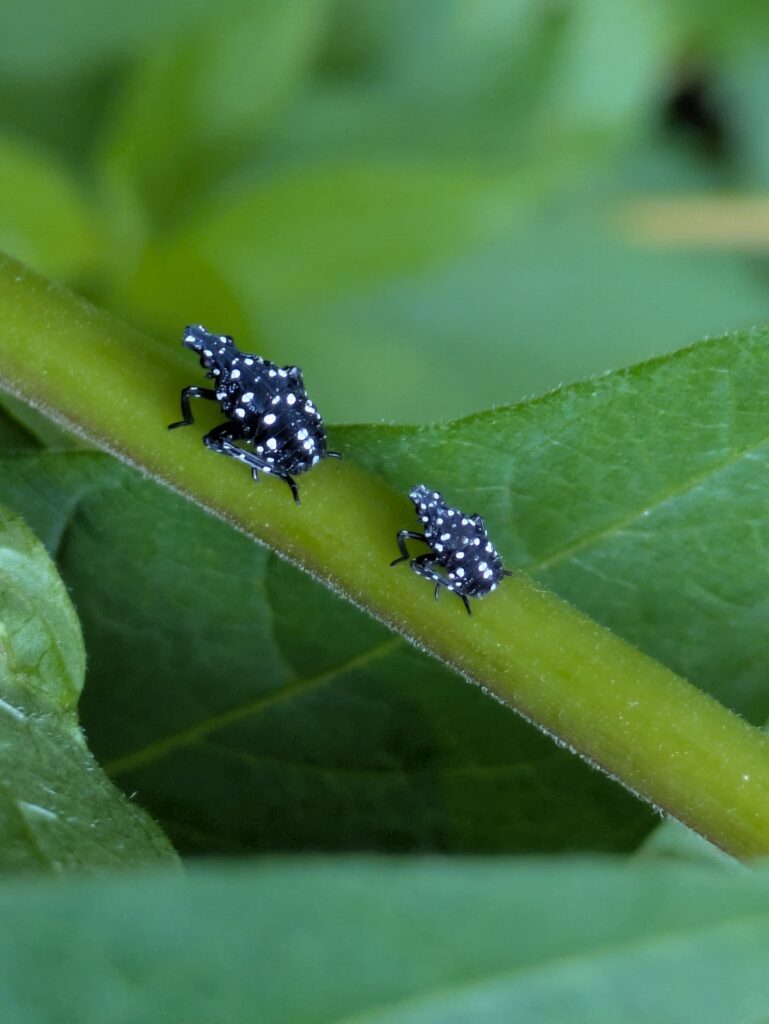
The wingless immature life stage of spotted lanternfly has already completed development in Massachusetts this season. Early instar nymphs (immature stages; first, second, and third instar) are black with white spots. By the last immature stage, the forth instar, they develop red patches in addition to the black color with white spots. This is the last immature stage before they mature into an adult. Both the immature insect and the adult are quite visually striking. Adults are especially so when they have been startled and expose the bright red coloration on the hind wings. When an adult is at rest, particularly on the trunk of the tree of heaven, their gray, spotted color allows them to blend in.
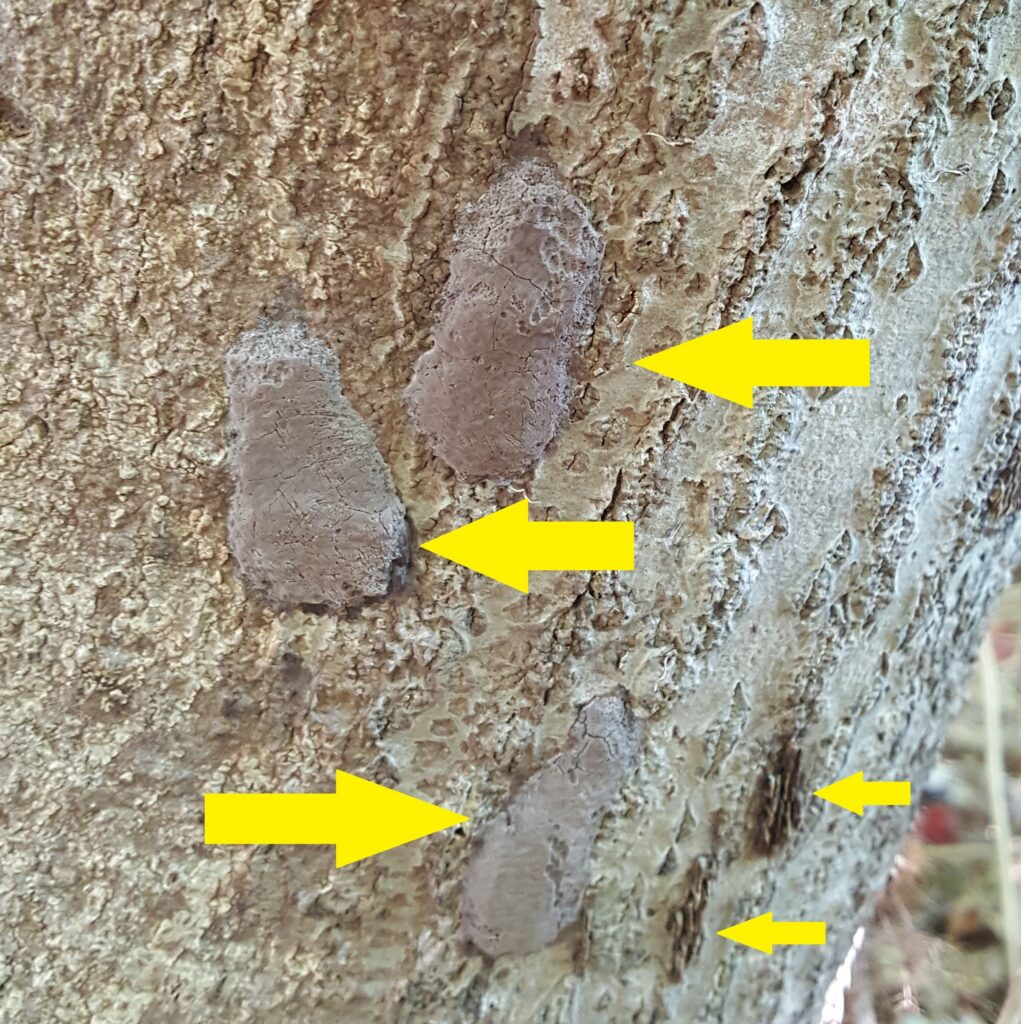
Freshly laid egg masses appear as if coated with a white substance. Adults have laid or are currently laying egg masses that will overwinter into the next growing season. As they age, egg masses look as if they are coated with gray mud, which eventually takes on a dry/cracked appearance. Very old egg masses may look like rows of 30-50 brown seed-like structures aligned vertically in columns. Coated egg masses may look like “weird spongy moth (Lymantria dispar) egg masses,” another insect we are familiar with here in Massachusetts.
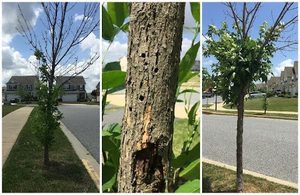
The adults and immatures of this species damage host plants by feeding on sap from stems, leaves, and the trunks of trees. Nymphs (immatures) are often found on smaller plants and vines as well as the new growth of trees and shrubs. Third and fourth instar nymphs migrate to the tree of heaven and are observed feeding on trunks and branches. Trees may be found with sap weeping from the wounds caused by the insect’s feeding.
The sugary secretions (excrement called honeydew) created by this insect may coat the host plant, later leading to the growth of sooty mold. Insects such as wasps, hornets, bees, and ants may also be attracted to the sugary waste created by the lanternflies, or sap weeping from open wounds in the host plant.
Death of ornamental trees because of spotted lanternfly feeding has not yet been reported. However, in Pennsylvania, death of some tree-of-heaven and flagging on black walnut has been seen. In landscapes, spotted lanternflies are mainly a nuisance. In production agriculture, though, this insect has killed grape vines (in PA), creating concern for Massachusetts vineyards. Pennsylvania reports that grape vines that had significant feeding by SLF either produce nonfruiting shoots or die the following year. They also note studies that indicate spotted lanternfly may reduce the hardiness of grape vines, leading to winter damage of bud or vascular tissue.
Tree-of-heaven and other host plants, bricks, stone, lawn furniture, recreational vehicles, play structures, gazebos, fencing, and other smooth surfaces should be inspected for egg masses. Egg masses laid on outdoor residential items such as those listed above may pose a risk for spreading this insect via human aided movement.
Where is the population now?
For a map of the confirmed populations of spotted lanternfly in MA and latest information, visit MDAR’s Invasive Pest Dashboard. If you find adult spotted lanternflies or their egg masses near you, which are present at this time, please report them to the MA Introduced Pests Outreach Project Spotted Lanternfly Report page. Want to help reduce the risk of moving this insect to new locations? Inspect vehicles for hitchhiking adults and egg masses and remove them before leaving an infested area.
What can you do?
Property owners, managers, and occupants can manage adult spotted lanternflies by vacuuming up the insects if large aggregations (groups) need to be removed quickly. The insects can be left in canisters or bags until deceased and then disposed of. Additional integrated pest management (IPM) tools are available for professionals assisting with the management of this insect. This can include but is not limited to:
- Cultural management: promote plant health and remove favored SLF hosts if possible, including tree of heaven (Ailanthus altissima). (Note: removal of tree of heaven is a difficult process that may require the use of herbicides, in addition to physical removal.)
- Mechanical management: swat/stomp adults; scrape/crush eggs.
- Chemical management: reduced-risk insecticide management options (such as insecticidal soap, horticultural oil, neem, and pyrethrins), contact insecticides (such as bifenthrin, zeta-cypermethrin, and carbaryl) or systemic insecticides (such as dinotefuran). (Note: dinotefuran is state restricted use in Massachusetts and cannot be applied without proper certification from the Pesticide Program. Additionally, all these active ingredients have risks and benefits associated with their use. It is essential that users learn about these risks and benefits and choose the option that is most appropriate for them when considering the specific characteristics at the site being managed.)
- Biological control: support natural enemies by providing habitat for them. Classical biological control efforts are also underway: Dr. Hannah Broadley of the Forest Pest Methods Laboratory and collaborators have requested permission to release Dryinus sinicus, a “pincher” wasp predator and parasitoid to manage spotted lanternfly. The hope is this will be available for use by researchers and state and federal partners at a future date.
For more information, visit these resources from UMass Extension, the MA Department of Agricultural Resources, and PennState Extension. For information about managing spotted lanternfly in grape production, please visit UMass Extension’s Fruit Program.
Disclaimer: The information in this article is not presented as recommendations, but rather as research-based and expertly audited knowledge intended to help practitioners make informed decisions. The content author makes no guarantees and assumes no liability as to the efficacy of outlined practices or listed materials. The user of this information assumes all risks and liability for personal injury and property damage.